
Practical Responsible Gambling Tools for Online Casino Play
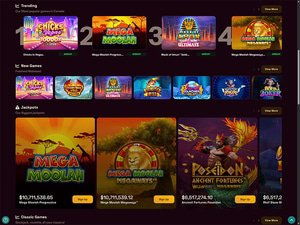
Responsible gambling tools are most useful when they are set before play becomes difficult to manage. For Canadian adults comparing grizzlys quest casino online with other desktop and mobile casinos Canada, the important question is not simply which games are available, but whether account controls fit their habits. The available information describes deposit limits, session reminders, self-assessment material and self-exclusion options. These tools cannot remove every risk, but they can create useful pauses, make spending more visible and support a deliberate approach across computers, phones and tablets.
Start with a limit that reflects your real budget
A deposit limit is one of the most practical controls because it places a boundary around money added to an account. The stated account tools include daily, weekly and monthly deposit-limit settings in the banking or account area. A limit should be based on discretionary money left after rent, food, transport, debt payments, savings and other regular obligations—not on an amount that would create stress if lost.
Choose a period that matches the way you normally manage money. A weekly limit may be easier to understand if payday and household spending follow a weekly rhythm, while a monthly limit can align with a broader budget. It is also sensible to consider deposits made from more than one device. Switching from a desktop to a phone does not create a separate budget; the same personal limit should cover the account as a whole.
Do not treat a limit as a target to reach. It is a ceiling, not a suggested spending amount. If the available setting cannot be changed immediately, or if a requested adjustment requires support, check the operator’s stated process before depositing. A useful personal rule is to stop when the limit is reached rather than looking for another payment route, borrowing money or opening another account.
Use reminders to interrupt automatic play
Session reminders are designed to break up long periods of continuous gambling. They are particularly relevant on mobile browsers, where a player can move from another activity into a game with very little friction. On a desktop, a reminder can also counter the tendency to leave a casino tab open while working, watching television or doing other tasks.
Before starting, decide how long a session should last and what will happen when the reminder appears. A pause can include closing the game, checking the time, reviewing the account balance and moving to an unrelated activity. The value comes from treating the interruption as a decision point rather than dismissing it automatically. If reminders are available through the account, use them consistently instead of relying only on memory.
Watch for signs that the tool is no longer enough. Ignoring repeated reminders, extending play after deciding to stop, gambling late into the night or returning quickly after a loss may indicate that a stronger restriction is needed. A simple record of start time, end time and money deposited can reveal patterns that are easy to miss during play. Such a record is useful on both a computer and a phone because it focuses on behaviour rather than a particular screen.

Consider self-exclusion when a pause is not enough
Self-exclusion is a stronger measure than a deposit limit or reminder. It is intended for situations in which someone wants to prevent access for a defined period, rather than merely reduce the amount or duration of play. The available information indicates that self-exclusion is supported, while requests for exclusion and some other controls may require contact with support.
Read the stated terms before making a request. Check how the exclusion is activated, what duration choices exist, whether the restriction applies across related accounts and what happens to pending transactions or promotional balances. Do not assume that an exclusion from one website automatically covers every gambling service. If the process is unclear, contact the operator through its published help or support channels and keep a record of the request.
Self-exclusion works best when paired with practical changes outside the account. Remove saved payment details, delete shortcuts, use device-level blocking tools and tell a trusted person about the decision. Avoid trying to bypass the restriction through another account or someone else’s payment method. For broader support and information about gambling-related harm, CAMH information on problem gambling offers a Canadian public-health perspective.
Check the difference between desktop and mobile controls
The responsive website is described as usable on iPhones, Android phones and tablets through a mobile browser, with access to account areas, balances, offers, support and compatible games. A desktop browser may provide a larger view of banking records and account settings, while a phone makes access more convenient and more portable. Convenience can be helpful, but it can also make impulsive play easier.
Set limits and reminders in a calm setting rather than during an active session. On a larger screen, take time to locate the banking, account and responsible-gambling sections, read the displayed status and confirm that settings have saved. Then check the same controls from the mobile browser. The aim is not to create duplicate settings, but to understand how the account presents the same restrictions on different screen sizes.
There is no established dedicated native iOS or Android application in the supplied information; browser access should not be confused with an App Store or Google Play download. That distinction matters for safety because unofficial applications, copied websites and browser extensions may request unnecessary credentials. Use only the operator’s known website, keep device software updated and avoid gambling on a shared device where another person could alter settings or access the account.
Review your behaviour before changing any setting
Self-assessment information can help turn a vague concern into a more specific decision. Ask whether gambling is affecting bills, sleep, relationships, work, concentration or mood. Also consider whether you are chasing losses, hiding activity, increasing stakes to recover money or feeling restless when unable to play. One “yes” does not diagnose a problem, but several signs justify taking a break and seeking independent support.
Review account history rather than judging a session by its outcome. A win can conceal frequent deposits, while a loss can encourage further play in an attempt to recover it. Look at deposits, withdrawals, time spent and how often limits were changed or reminders dismissed. If the account records are difficult to interpret, ask support how to access the relevant transaction or activity information without treating support as a substitute for professional advice.
Make changes in order of strength. A budget and deposit limit may be suitable for controlled recreational play; reminders can add structure; self-exclusion is more appropriate when stopping has become difficult. Never regard loyalty points, promotions or bonus balances as reasons to continue. They are not income and should not influence a decision to deposit. If gambling is causing harm or feels unmanageable, speak with a qualified health or support service rather than attempting to solve the issue through account settings alone.
Questions about responsible gambling controls
Can a deposit limit prevent every gambling loss?
No. A deposit limit controls money added through the account, but it does not guarantee that a person will stay within an overall household budget or avoid other gambling services. Treat it as one layer of protection, combine it with time limits and review spending regularly.
Are mobile and desktop responsible-gambling settings separate?
They should be checked through the same account rather than assumed to be separate. The supplied information describes browser-based mobile access alongside desktop use. Confirm the displayed limits and reminders on each device, and contact support if the account does not clearly show how settings apply.
When should someone choose self-exclusion?
Self-exclusion may be appropriate when limits and reminders are being ignored, gambling is interfering with daily life or stopping has become difficult. Read the applicable terms, request the restriction through the stated process and consider independent support so the decision is reinforced beyond the account.